Author: awesomes

  • The best way to sit still is to keep moving

    The best way to sit still is to keep moving

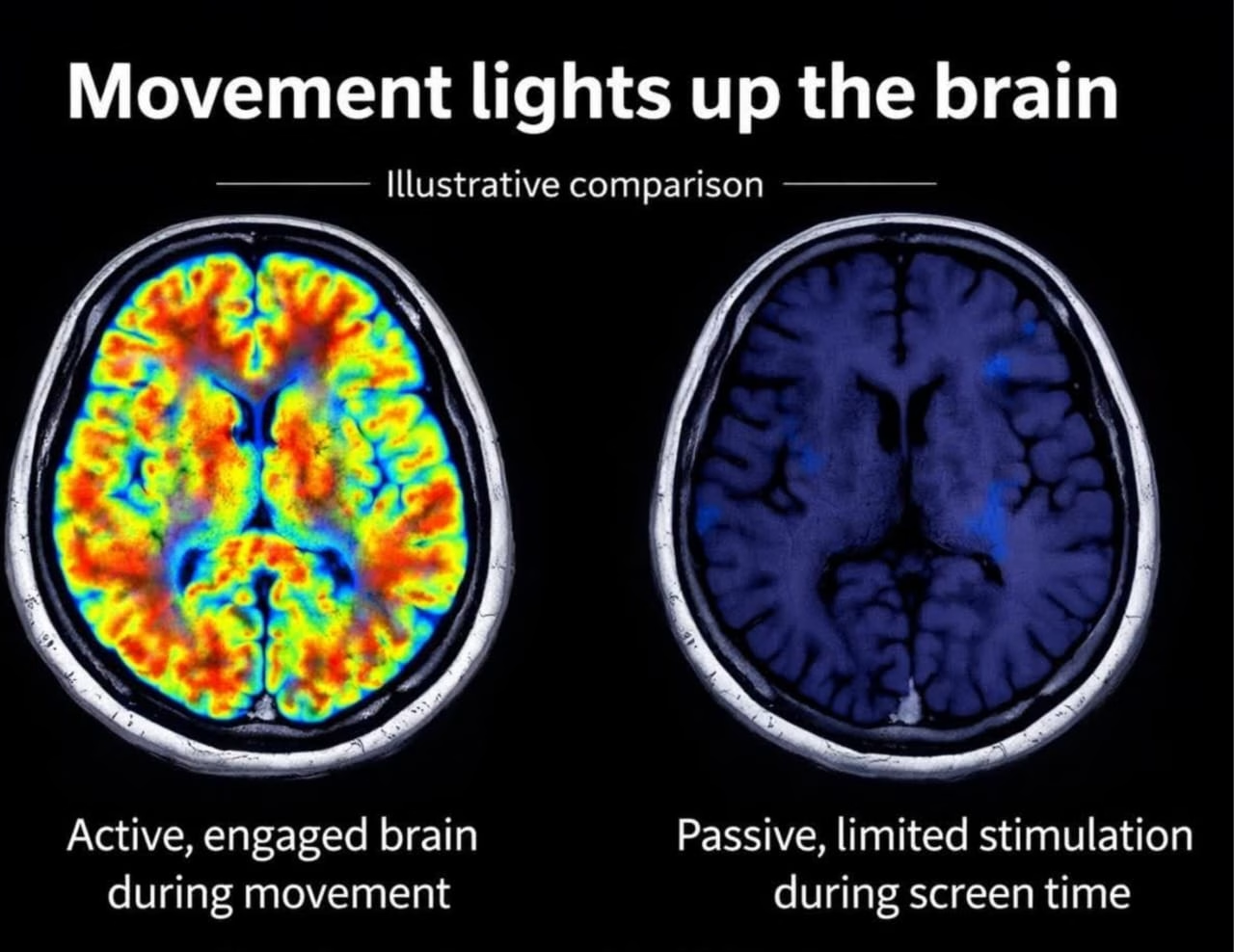
    Take a look at the two brains. One is a dim, quiet landscape of passive screen time; the other is vibrant – a “lit up” map of neural activity. The difference? Movement. For a Foundation Phase learner, movement isn’t a distraction from the lesson – it is the engine that drives it. When we tell a child to “sit still and listen,” we are actually asking their brain to perform a massive feat of endurance that leaves very little energy left for learning. Here is why we need to trade the “quiet classroom” for a “moving mind”.

    Dr. Eric Jensen, a leading educational neuroscientist, notes that the cerebellum contains nearly half of the brain’s neurons and has massive connections to the prefrontal cortex. When a child moves, they aren’t just burning energy; they are stimulating the neural pathways responsible for attention and decision-making.

    Historically, the cerebellum was thought to only control motor function. However, modern neuroimaging shows it is also highly active during cognitive processing. The same part of the brain that processes movement also processes spatial perception and language.

    Cross-lateral movements – activities where a child crosses the midline of their body (e.g., touching their left hand to their right knee) – are critical for Foundation Phase learnings.

    These movements force the left and right hemispheres of the brain to communicate via the corpus callosum.

    Studies on Neuroplasticity show that crawling, skipping and bilateral coordination strengthen the myelin sheath (insulation) on nerve fibers, which speeds up the transmission of information.  This is foundational for learning to read, as the eyes must track across a page (crossing the midline) smoothly.

    It is also important to note that movement increases blood flow, which delivers OXYGEN and GLUCOSE to the brain. BDNF (Brain-Derived Neurotrophic Factor) is often called “Miracle-Gro for the brain”, and physical activity triggers its release.  Research from the University of Illinois demonstrated that children who engaged in physical activity performed significantly better on executive function tasks and standardized tests than their peers.

    When we look at pre-schoolers, we’ve learned that the Vestibular (balance) and Proprioceptive (body awareness) systems are the gatekeepers of their focus.  A child who cannot sit still often has an “under-fueled” vestibular system.  They move because their brain is literally craving the input it needs to stay awake.

    So, let’s make it easier to understand:

    Type of MovementCognitive BenefitWhy it matters
    Crossing MidlineHemispheric integrationEssential for reading and writing (eye-tracking).
    Balance/SpinningVestibular stimulationImproves focus and settles the nervous system.
    Fine Motor PlayNeural densityHand-eye coordination correlates with later math success.
    Aerobic ActivityBDNF releaseIncreases memory retention and mood regulation.

    What this all means is that a quiet, still classroom isn’t necessarily a learning classroom. For a five-year-old, sitting still is a massive cognitive load that competes with the energy needed to listen.

    By incorporating movement, we reduce that load and allow the brain to focus on the message, not just the chair.

  • Repitition Repitition

    Repitition Repitition

    Why Why Repetition Repetition Is Is So So Important Important

    If you’ve ever peeked into a preschool classroom and thought, “Didn’t they do this yesterday?”—you’re not alone. But what might look like “more of the same” is actually one of the most important parts of early learning: repetition. While it might seem like your child is just singing the same song, working the same puzzle, or practicing the same movement again and again, there’s a powerful reason behind it. In fact, repetition plays a key role in how young children grow, learn, and gain confidence.

    Here’s why those repeat activities are not only necessary but incredibly beneficial:

    🧠 Repetition Builds Stronger Brains

    When your child revisits an activity, the brain gets to work—strengthening neural connections and creating links between what they already know and new information. Just like practicing tennis helps your body improve muscle memory, repeating a learning task strengthens the brain’s ability to store and recall information. Over time, actions that once required effort become second nature.

    💡 It Helps Children Learn Better (and Remember Longer)

    Repetition helps children retain what they learn. Each time a child repeats a task—like matching shapes or recalling a song—they’re reinforcing memory pathways. This builds the foundation for learning more complex skills later on. The more often the brain retrieves information, the stronger and more lasting that information becomes.

    💪 Repetition Builds Confidence

    There’s something magical about seeing a child light up when they finally “get it.” When children repeat an activity and begin to master it, they feel a great sense of accomplishment. That feeling builds confidence—not just in that skill, but in their overall ability to learn and succeed. The phrase “I did it!” becomes a powerful motivator.

    😊 It Reduces Stress and Brings Joy

    Familiar tasks bring comfort. When children know what to expect and are able to do something well, they feel safe and satisfied. Repetition creates a positive feedback loop—the more children practice, the better they get, and the better they feel. This satisfaction can reduce learning-related anxiety and increase joy in the classroom.

    👀 It Sharpens Focus

    With repeated practice, the brain learns to pay attention at the right times. Structured repetition helps children stay engaged and alert. Over time, their brains begin to recognize patterns and anticipate what comes next, improving attention spans and readiness to learn.

    🔄 Predictability Creates Security

    Just like bedtime routines help children wind down and feel safe, repetition in the classroom provides structure. Predictable routines built through repetition make the school day feel manageable and less overwhelming. In a world that’s full of new and sometimes confusing experiences, knowing what comes next helps children feel secure and in control.

    ✨ Even “Simple” Repetition Has Layers of Learning

    To adults, it might look like a child is just stacking blocks again, but something new is happening each time. Maybe the first time they learned how to balance, the next time they learned about shapes, and another time about patience or problem-solving. Repetition allows children to explore new layers of understanding with each go.

    📈 It Grows Self-Confidence Over Time

    As children become more familiar with an activity, they start to trust themselves more. The confidence that comes from mastering a repeated task spreads to other parts of their life. It builds a strong foundation for taking on new challenges.

    🎯 It Teaches a Lifelong Skill: Practice Makes Perfect

    Repetition teaches a lesson that’s true well beyond preschool—you get better with practice. By incorporating repetition into early learning, children discover that effort leads to progress. It’s a lesson that will help them in school, sports, music, and so much more as they grow.

    In Summary: Repetition Is a Gift

    So the next time your child sings the same song for the tenth time or insists on doing a puzzle they’ve already mastered, take a moment to smile. That repetition is doing more than keeping them busy—it’s building their brain, boosting their confidence, and setting them up for a lifelong love of learning.

    Preschool isn’t about rushing to the next big milestone. It’s about giving children the time, space, and repetition they need to make each discovery their own. And that’s something truly worth repeating.

  • Monkey See, Monkey Do

    Why Children Imitate Their Parents and How You Can Set a Good Example

    As parents, we often find ourselves giving instructions to our children: “Eat your vegetables,” “Pick up your toys,” or “Be kind to others.” But sometimes, no matter how many times we say it, our children don’t seem to listen. Instead, they might mimic our actions, repeat our words, and even mirror our emotions. This is where the age-old saying “monkey see, monkey do” comes into play.

    Why Do Kids Imitate Us?

    Children are natural imitators, especially in their early years. Between the ages of 2 and 6, they are in a crucial developmental stage known as observational learning, where they pick up behaviours and skills simply by watching the actions of those around them—particularly their parents. In fact, research has shown that children are more likely to copy their parents’ behaviour than anything else they see because, at a young age, they trust us more than anyone else.

    This isn’t just about copying words or actions. Children imitate emotions, attitudes, and values, too. If they see us responding with patience and kindness, they are more likely to adopt those same qualities. If they see us getting frustrated easily or ignoring someone in need, they may believe those behaviours are acceptable or normal.

    The Importance of Leading by Example

    It can be tempting to rely on direct instructions like, “Don’t do that,” or “This is how you should behave.” But research consistently shows that children are more likely to act according to what they see than what they hear. This means that while we can tell them what we expect, we must also show them.

    For example:

    • Showing Patience: If we are patient when things go wrong—like when a toy breaks or when they have trouble solving a problem—they learn that staying calm is a good response to frustration. But if they see us yelling or giving up easily, they’ll start to mirror those reactions when they face challenges.
    • Modelling Respect: If we speak respectfully to others, especially in moments of stress, our children will learn how to treat people with kindness and respect. If, however, they hear us speaking rudely to others, they might come to believe that this is acceptable behaviour.
    • Displaying Healthy Habits: Children often model their parents’ eating, exercise, and hygiene habits. If we make healthy food choices and prioritize physical activity, our children are more likely to do the same. Conversely, if we skip meals or avoid physical activity, they may adopt those unhealthy habits as well.

    How This Plays Out in School

    The influence of parents doesn’t end at the door of the house. Teachers and school staff often notice when children are not getting consistent reinforcement of positive behaviours at home. Many teachers  express frustration over the gap between what they teach and what children experience at home.

    Research on Teacher-Parent Collaboration highlights that children who have strong family support systems tend to perform better academically and socially. However, when children lack consistent role models at home, it can lead to difficulties in school behaviour, lack of focus, and resistance to following rules.

    For example, a teacher might work hard to encourage positive behaviour in class—such as raising hands before speaking or following instructions without disruption. However, when the child goes home to a chaotic or non-structured environment, the classroom efforts may feel like they are being undone. Teachers often report that the child’s inability to follow through on tasks or lack of respect for others’ space can stem from not seeing similar values modelled at home.

    Teachers Can’t Do It Alone

    While teachers play a pivotal role in children’s education, they can’t be the sole influence on a child’s development. In fact, many children who struggle in school may not be showing these behaviours intentionally—they are simply modelling the behaviours they see at home. If a parent is constantly rushing, distracted, or stressed, the child might struggle with patience or focus in the classroom. If a parent dismisses the importance of education, a child might not value their own learning experience.

    Moreover, children with inconsistent or negative parental behaviours might find it more difficult to adapt to structured environments like school. Teachers face the challenge of reinforcing positive behaviours, but without a strong partnership with the family, the progress can be slow and uneven.

    As parents, we play a critical role in shaping our children’s behaviours, values, and attitudes. While telling them what to do is important, it’s even more crucial to show them through our own actions. By leading by example, we ensure that our children are learning not just from what we say, but from what they see. The influence we have as role models is far-reaching—into the classroom, into their friendships, and into their future.

    The next time you find yourself saying “Don’t do that!” remember that your child is more likely to “do what you do” than “do what you say.” So, the best thing you can do is set the kind of example that makes them want to follow. After all; monkey see, monkey do, and when we show them the way, we help them grow into kind, respectful, and responsible individuals.

  • Strengthening Parent-Teacher Relationships: Building Bridges for Student Success

    Parent-teacher relationships are the bedrock of a supportive and nurturing educational environment. These relationships thrive on open communication, trust, collaboration, and mutual respect.

    Effective two-way communication is fundamental for fostering a strong parent-teacher relationship. Communication methods can vary based on preferences and circumstances:

    • Face-to-Face Meetings, e-mails, newsletters and phone calls are all great.

    Setting expectations for regular updates and feedback is crucial. Teachers can establish a communication plan at the beginning of the school year, outlining how and when parents can expect to receive information about their child’s progress.

    Trust is built through transparency, honesty, and showing genuine interest in the child’s well-being. When parents and teachers respect each other’s roles and expertise, a positive and collaborative relationship flourishes. Through:

    • Transparency, honesty and displaying genuine interest a teacher displays commitment to the student’s well-being.

    Respect for each other’s roles is essential. Teachers possess expertise in pedagogy and curriculum, while parents have deep insights into their child’s personality and experiences. Collaborative efforts are most effective when both parties acknowledge and appreciate their contributions.

    Establishing shared goals for the student’s academic and personal development is a cornerstone of effective parent-teacher relationships.

    • Shared Goals and having regular reviews ensure continuous growth.

    Strategies for resolving misunderstandings or disagreements respectfully and constructively are essential for maintaining a harmonious relationship. Teachers and parents should approach conflicts with empathy and understanding. Through

    • Respectful communication and sharing a problem-solving approach the teacher and parent can collaborate on strategies to address issues.

    Recognizing and celebrating the student’s achievements, both big and small, creates a positive and motivating environment.

    The long-term benefits of strong parent-teacher relationships extend beyond academic success. Students who experience supportive and collaborative environments are more likely to develop self-confidence, resilience, and a love for learning.

    In conclusion, fostering strong parent-teacher relationships requires effective communication, trust, mutual respect, collaboration, and inclusivity. By working together, parents and teachers can create a supportive and nurturing environment that positively impacts students’ academic and personal development.

  • Addressing Second-hand Smoke: A Call for Awareness and Responsibility

    The presence of second-hand smoke in a child’s environment is a significant and often overlooked issue. Many educators encounter children whose belongings, including hair, clothes, and school materials, are permeated with the smell of smoke. This not only creates an uncomfortable atmosphere but also raises serious health concerns.

    Parents who claim they never smoke in front of their children might not realize that the smell and harmful chemicals linger and affect their surroundings. The pervasive odor of smoke can escape from every pore, making it clear that second-hand smoke exposure is happening even if it is not directly witnessed.

    The impact of second-hand smoke on children’s health is well-documented. It can lead to respiratory infections, asthma, and other serious health conditions. The damage to their developing lungs from second-hand smoke exposure can be long-lasting and more severe that the effects of smoking itself.

    It is essential to understand that no one grows up aspiring to be a smoker, facing bad lungs, chronic coughing and yellowed fingers and nails. Subjecting children to an environment filled with smoke deprives them of a choice and subjects them to unnecessary health risks.

    Moreover, attempts to mask the odor with body sprays, mouth sprays, or room fresheners are futile. The air remains tainted, and the underlying issues persist.

    Teachers who smoke, too, should reconsider their habits, as they have a responsibility to set a positive example for their students. Children are highly impressionable and look up to their teachers, making it crucial that educators embody healthy lifestyle choices.

    Vaping, although many people think it is healthier because it smells better, has proven to be just as harmful and still sets the same negative example.

    Creating a smoke-free environment is not just about immediate comfort; it is about safeguarding the health and well-being of the next generation. It is the duty of the adults to provide children with the best possible surroundings, free from harmful substances.

    Raising awareness and educating parents and guardians about the dangers of second-hand smoke is imperative. By understanding the impact of their actions, more people can take steps to protect children from the harmful effects of smoke exposure.

    Let us work together to ensure that every child has the opportunity to grow up in a healthy, smoke-free environment.

  • The power of quality time with your child

    Put down your phone and connect: The power of quality time with your child

    In our fast-paced digital age, it’s easy to get lost in the virtual world of screens and notifications. But what if I told you that the most precious moments are happening right in front of you? Yes, those giggles, curious questions, and little hands reaching out—they’re all waiting for your undivided attention. So, let’s explore the benefits of putting away our cell phones and diving into the magical world of playtime with our children.

    When parents engage in meaningful interactions with their children, it fosters emotional intelligence. Kids learn to recognize, understand, and manage their emotions better when parents are fully present and attentive.

    By putting away their phones, parents also model healthy behaviour for their children. Kids learn that face-to-face interactions are valuable and prioritize relationships over screens.

    We also can’t forget that spending undistracted time together strengthens the parent-child bond. It allows for deeper connections, shared experiences, and memories that will last a lifetime.

    To start you off, here are 5 fun brain-building games using music you can play with your child:

    Musical freeze dance: Play upbeat music and encourage your child to dance. When the music stops, they freeze in place. This game enhances coordination, rhythm, and listening skills.

    Sing-Along story time: Read a picture book together and incorporate songs related to the story. Singing helps with language development and memory retention.

    Rhythm band jam: Gather simple percussion instruments (like shakers, drums, or tambourines … or make your own like rhythm sticks, pots and spoons). Create rhythms together and explore different beats. This activity boosts creativity and fine motor skills.

    Name that tune: Hum or play short tunes on a keyboard or xylophone. Have your child guess the song. It sharpens auditory perception and memory.

    Sound scavenger hunt: Go on a sound hunt around your home or yard. Listen for specific sounds (birds chirping, a doorbell, water running) and discuss them. This game enhances listening skills and attention to detail.

    A 2020 survey found that nearly 70% of parents feel distracted by their phones when spending time with their children (Then again, the survey did take place during Covid … so we have to keep that in mind 😉) But … frequent distractions hinder meaningful interactions and emotional bonding. Children may feel they are competing for attention when parents are glued to their gadgets. Kids observe that their parents prioritize screens over face-to-face interaction, impacting their social development.

    Remember, putting down your phone and actively engaging with your child can lead to a happier, healthier parent-child relationship.

  • Music is like brain food

    New research reveals that even if someone hasn’t had formal music training, their brain still has areas that can recognize and respond to music. Imagine your brain as a musical detective – it can pick up on musical clues even if you are not a professional musician!

    Scientists conducted this study using fancy brain scans (called fMRI) to peek inside the brains of young adults. They wanted to see how their brains react to different sounds, especially music.

    In this study they invited two groups of people to participate:

    Nonmusicians: These folks had little to no formal music training (less

                                        than two years).

    Musicians: These were the music pros – they’d been training for

                            around 16 years since they were kids.

    Both groups listened to short music clips, as well as other sounds.

    Then came the musical mystery: The music-selective parts of their brains (like secret music agents) responded strongly to both familiar and unfamiliar music. Even when the music was a bit strange or not what they were used to, their brains still perked up! So, listening to music – even casually – helps our brains become music experts.

    What does that mean for parent’s?

    Encourage your children to listen to different types of music. It is like giving their brains a workout! Whether it’s classical, rock, or even those funky rhythms, music is like brain food.

    In our Music Minds classes we use the proven channel of music in every activity to stimulate the minds of our children as we do our lessons.  We have learned that it increases their memory as well as participation. Let the tunes play – it’s good for their brain.

  • Back to school tips

    It’s time for our little one’s to get back to school. Weather it is pre-school or primary school, here are some tips to help them be ready.

    Pre-school children learn best through play. Provide them with a variety of toys and games that promote learning and creativity. Encourage your child to interact with peers. This can help them develop important social skills like sharing, taking turns, and expressing their feelings. Allow your child to do simple tasks on their own, like dressing up or packing their bag. This can boost their confidence and promote independence. Talk to your child about what to expect in pre-school. Discuss the new environment, teachers, and friends they will make. This can help them emotionally prepare for the transition. Engage your little one in conversations and read to them regularly. This can enhance their language skills and vocabulary. Activities like drawing, cutting, or threading beads can improve your child’s fine motor skills. Similarly, running, jumping, or playing ball games can enhance their gross motor skills.

    Some back-to-school tips for primary school children:

    1. Establish a Routine: Start adjusting your child’s bedtime and wake-up time to match the school schedule. This helps them get used to the school routine.
    2. Healthy Eating: Ensure your child has a healthy breakfast before school and packs a nutritious snack. This will keep them energized throughout the day.
    3. Homework Habits: Set a specific time and place for homework. This helps your child understand that homework is a priority.
    4. Stay Positive: Talk about school in a positive way. Discuss the exciting activities, new classes, and friends they’ll meet.
    5. Meet the Teacher: If possible, arrange a meeting with your child’s teacher. This can help your child feel more comfortable and gives you the opportunity to discuss any concerns.
    6. Prepare the Night Before: To avoid morning chaos, prepare things like clothes, packed lunches, and backpacks the night before.
    7. Encourage Reading: Encourage your child to read at home. This can help improve their language skills and instil a love for reading.
    8. Talk About Their Day: Ask your child about their day at school. Show interest in what they’re learning and the activities they’re doing.

    Remember, cognitive development activities are crucial for children. Here’s an additional point to consider:

    • Engage your child in activities that stimulate their brand and enhance their cognitive skills. This could include puzzles, memory games, reading, paining, or playing a musical instrument. These activities can improve their problem-solving abilities, memory, focus and creativity. They also help children understand the world around them better and adapt to new situations. Remember, learning can be fun too!

    So, along with the previous tips, incorporating cognitive development activities into your child’s routine can significantly contribute to their overall growth and development. Remember, every child is different and unique and might need different approaches and strategies. The key is to be patient, supportive, stay involved and make the learning process fun for your child while providing a loving environment. Good luck! 

  • The Benefits of Reading to Babies

    Reading to babies is a cherished activity that parents and caregivers can engage in. It is not just a bonding experience, but it also plays a crucial role in the baby’s cognitive development.

    Reading introduces babies to a greater number of words and more complex language than they might otherwise hear in day-to day conversation. This exposure to language helps babies’ blossoming language skills really start to bloom. A 2019 study found that babies who are read to every day are exposed to around 78 000 words each year.

    Babies aren’t just looking at the pictures in their favourite books. They’re also watching you frown when a book character is frustrated or smile at the happy ending. “Your baby mimics your expressions and the sounds you make,” says paediatrician Sarah Klein, MD. This emotional learning aids in early brain development. Moreover, reading provides a wonderful opportunity for you and your child to connect. It’s a nice way to spend time together and slow down during an otherwise hectic day.

    Research has shown that reading as a brain stimulator for infants helps build early literacy skills and encourages brain stimulation. It also aids in the development of their memory, and critical thinking skills. A 2013 study showed that babies who are read to and talked to score higher in cognitive development, like problem-solving.

    Research has shown that about a third of kids start school without the language skills they need to learn to read.  Reading to babies and small children helps them to develop those valuable skills. In fact, researchers say that verbal interactions (reading, talking, etc.) between parents and young kids may promote higher language and IQ scores all the way up to age 14.

    Reading can be a great addition to the daily schedule.  If you get in the habit of reading at bedtime, for example, a book can signal to a baby that it’s time to slow down and get ready for sleep.

    In conclusion, reading to babies is a simple yet powerful tool that can have profound impacts on their cognitive development and emotional well-being. It’s never too early to start.

  • The Benefits of Music Minds as an Extra-Curricular Activity in South African Pre-Schools

    Music Minds, a cognitive development program based in South Africa, is making waves in the field of early childhood education. This program, available in both English and Afrikaans, uses the universal language of music to stimulate the minds of young children and lay a solid foundation for their physical, mental, and social skills. As an extra-curricular activity in pre-schools, Music Minds offers a plethora of benefits.

    Music Minds has been developed specifically for South African children. It uses music and various exercises to develop a child’s mind. The program focuses on enhancing speaking skills, motor skills, listening skills, visual skills, tactile development, and language development. These are all critical areas that contribute to a child’s cognitive development.

    The program offers age-appropriate stimulation programs that gradually grow in complexity. These programs are designed for different age groups ranging from babies to children up to 8 years old. Each program contains focused steps for the development of various skills.

    The curriculum of Music Minds is locally relevant and culturally sensitive. It includes songs, illustrations, and activities that resonate with South African children. This makes the learning process more engaging and relatable for the children.

    Research has shown that music education in early childhood can improve fine motor skills and coordination, enhance language development, improve focus and memory, boost fundamental math skills, instil discipline and teamwork, and increase self-confidence and self-esteem.

    Incorporating Music Minds SA into the school curriculum of preschools, beyond being cost-effective, offers several benefits:

    1. Holistic Development: Music Minds SA focuses on the overall development of a child. It enhances cognitive abilities and contributes to physical, mental, and social skills development.
    2. Improved Academic Performance: Studies have shown that music education can lead to improved performance in other academic areas. For instance, it can boost fundamental math skills and enhance language development.
    3. Cultural Relevance: The curriculum of Music Minds SA is locally relevant and culturally sensitive, which makes the learning process more engaging and relatable for South African children.
    4. Enhanced Soft Skills: Music education instils discipline and teamwork and increases self-confidence and self-esteem. These soft skills are crucial for a child’s personal and social development.
    5. Enjoyable Learning Experience: The use of music as a tool for learning makes the education process enjoyable for children. This can lead to increased interest and participation in learning activities.

    Incorporating Music Minds as an extra-curricular activity in South African pre-schools can provide a holistic approach to early childhood education. It not only enhances cognitive abilities but also contributes to the overall development of a child. The program’s focus on using music as a tool for learning makes it an enjoyable and effective method for early education.

    In conclusion, integrating Music Minds SA into the school curriculum can provide a comprehensive, enjoyable, and effective method for early education that goes beyond just being cost-effective.